


Vehicle lifetime: unlimited

The true luxury of restomods is no longer about power or even rarity, though both are usually abundant. Their value lies in the opportunity to continue the biography of a car that is, for all intents and purposes, long dead—simply by asking the question: "What if?" What would the Honda NSX have become had analogue instruments not given way to screens? How might the Lancia 037 have sounded had the Group B era not burned out, but simply matured? And wouldn't you be curious about a Range Rover Classic grandfather, but without the British indulgence toward squeaks, oil weeps, and stately wallow?
Or close your eyes and imagine that an electric powertrain in a Rolls-Royce Corniche is not sacrilege, but perhaps the most natural way to bring the idea of silent luxury and quiet money—one of the brand's core values—to its ultimate crescendo.
This review presents six very different answers to one question: how can we engage with the past without turning it into a museum? Each of them proves in its own way that the good old days need not be packed in mothballs and tucked away in a cupboard—the past, as it happens, knows how to tell a good story. You just need to season it with a contemporary cadence.
JAS Motorsport Tensei
The JAS Motorsport Tensei is a restomod from that rare category where the subject is not merely a beautiful old coupé, but the holy grail of engineering. The original Honda NSX was a supercar that challenged the Italian rulebook: instead of temperamental outbursts and noisy histrionics, it offered balance, lightness, and even a certain utilitarianism. Now, the modern Italians at JAS Motorsport, in collaboration with Pininfarina, propose to imagine what the NSX could have become had its analogue lineage not ended, but continued to evolve into the 21st century.
The name Tensei translates from Japanese as "rebirth", and here that is not a marketing metaphor but a fully realised technical brief. The Tensei is based on the first-generation NSX. The car receives an entirely new carbon-fibre body, widened tracks, slightly more squat proportions, contemporary lighting, and enhanced aerodynamics.
Yet everything that made it iconic remains: the iron-like silhouette, the black glazed canopy, the mid-engined layout, and the feel of a supercar built not for poseurs with "mano a borsa", but for perfectionists in thin-rimmed spectacles.
Behind the driver sits a naturally aspirated V6 inspired by the original NSX architecture, paired with a six-speed manual gearbox.
JAS has not yet released performance figures, but the direction is clear: not headline-grabbing records, but response, balance, and mechanical analogue purity. The Tensei will be produced in an ultra-limited series at the workshop near Milan, with bespoke orders accompanied by Pininfarina in Cambiano.
Kimera EVO37
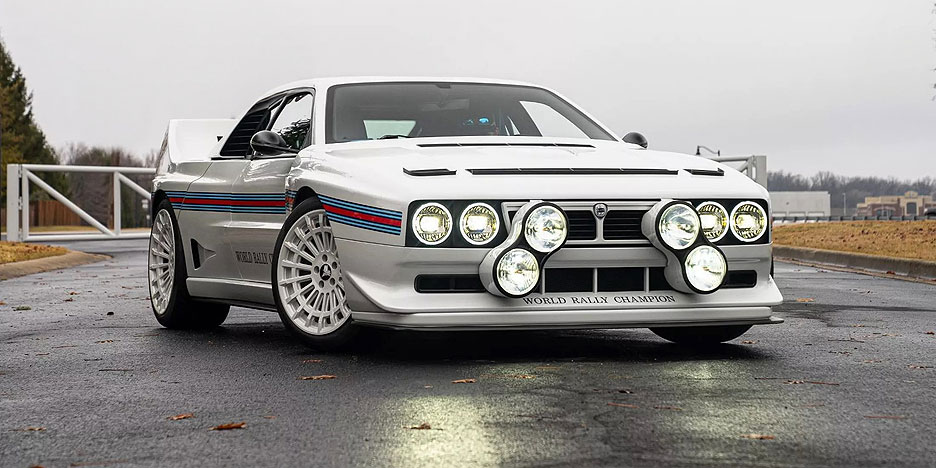
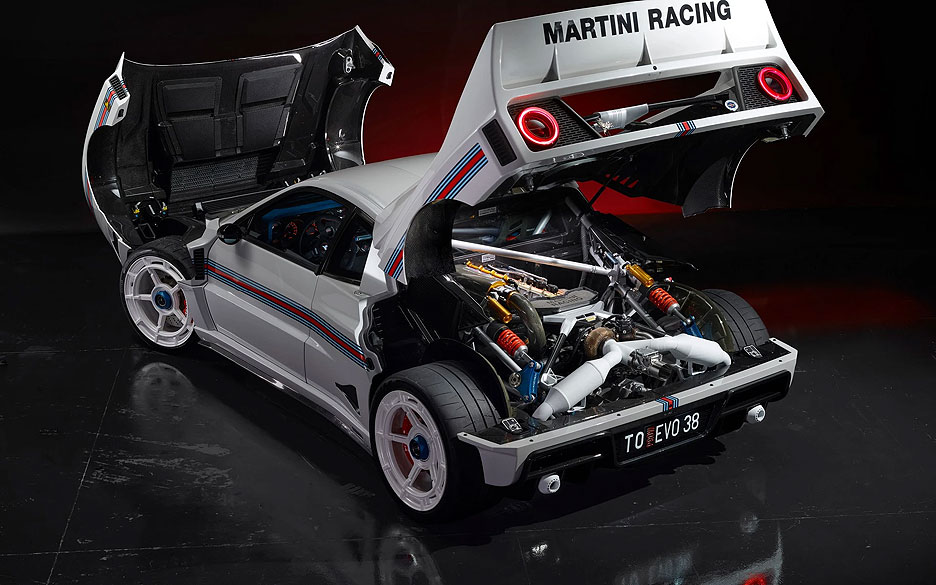
The Kimera EVO37 is a fantasy on the theme of homologation rally royalty. Its foundation is the legendary Lancia Rally 037 Stradale—the last rear-wheel-drive car to win the World Rally Championship.
The Italians at Kimera do not touch the original 037s; instead, they take the related Lancia Beta Montecarlo, reinforce its steel monocoque with a tubular frame, and atop this base construct a virtually new car: with a lightweight carbon-fibre body, modern suspension, racing brakes, and a driving position that looks as if it has just leaped out of the service park on a night stage at San Remo.
The magic of the EVO37 lies behind the driver. Here sits a longitudinally mounted 2.15-litre inline-four with a dry sump and combined forced induction: a Roots-type supercharger working in tandem with a turbocharger—turbo lag is a forgotten nightmare. Output is 505 bhp and 550 Nm, drive is to the rear wheels, and the transmission is a six-speed manual with a limited-slip differential.
Production of the EVO37 is limited to 37 units. Kimera has built not just an expensive toy for collectors, but an alternative reality in which the Group B era did not end, but grew into a gentler beast.
Autoforma Norrsken
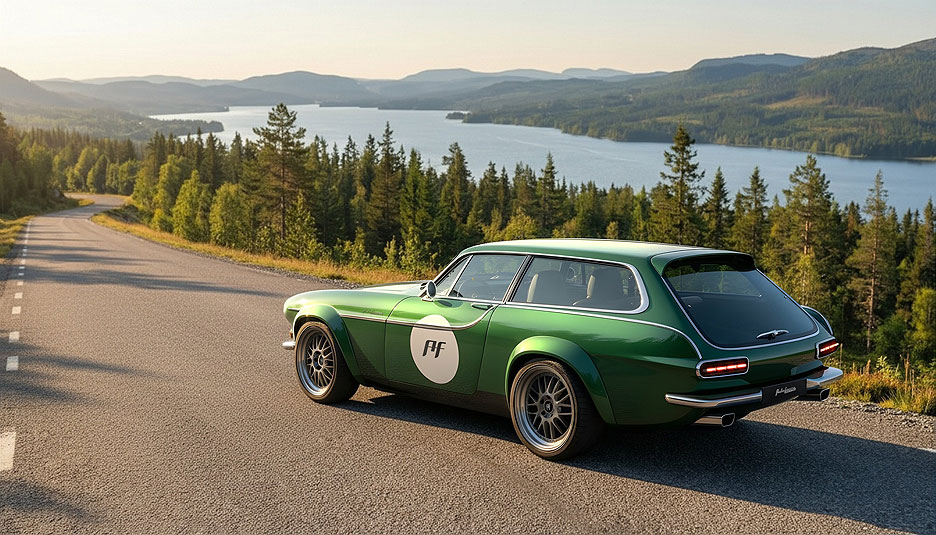
The Autoforma Norrsken is a rare restomod with almost no desire to sound louder than necessary. Almost. Its base is one of the most beautiful cars in history—the Volvo P1800 ES, a Swedish shooting brake with a glass tailgate, a roofline that goes on forever, and the nickname "Snow White's coffin".
The new project from Autoforma, created by the Niels van Roij Design team, does not erase the model's innate restraint. On the contrary, Norrsken—Swedish for "northern lights"—gently amplifies what matters most: proportions, light, texture, and upscale practicality.
The body is lower and wider. The lighting is modern, pragmatic LED. There are carbon-fibre arch extensions and a more taut stance, yet the character of the compact estate remains intact.
In the top-tier Forward Fashionista specification, under the bonnet sits a reworked five-cylinder Volvo T5, accompanied by a revised chassis, a quick-ratio steering rack, uprated brakes, and a modernised transmission.
The interior retains the classic architecture with round instruments, but now features leather, aluminium, woollen textiles, discreetly integrated modern multimedia, and a cargo area that reminds you: this is not a museum piece, but a car for living.
Norrsken will be produced in small numbers—about five cars per year. And therein lies perhaps its greatest charm: this Volvo chooses a different luxury—the silence of taste, Nordic clarity, and the conviction that a practical body can also be a collector's object.
Kingsley KSR Range Rover Classic
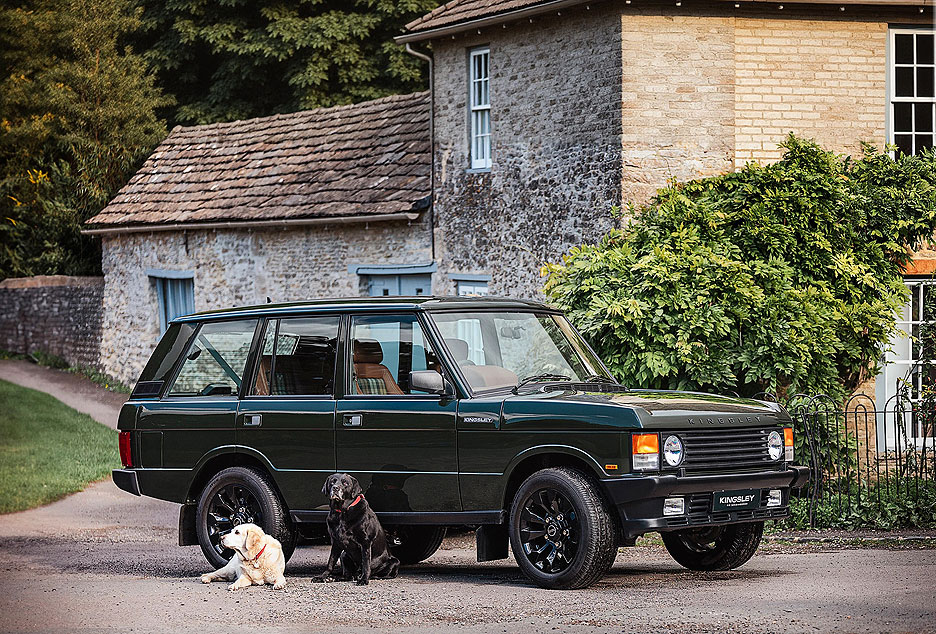
The Kingsley KSR is a restomod for those who do not want a snarling supercar from the past, but an old Range Rover Classic finally fit for modern life without forgiving allowances for its age.
The British at Kingsley Re-Engineered take a two- or four-door Range Rover Classic and preserve its essence: the boxy silhouette, thin pillars, high driving position, large windows, and the unmistakable look of a country house with a gravel drive in the London suburbs. But beneath this almost untouched aristocratic form hides a completely different mechanical package.
The base KSR receives a 4.6-litre V8 producing 270 bhp and approximately 420 Nm of torque, paired with an optimised four-speed automatic and four-wheel drive. On request, Chevrolet LS3 or LT1 V8s are available with six-speed gearboxes. The chassis is equally fresh: electronically controlled TracTive dampers with settings for city, highway, and off-road use, uprated Kingsley Big Brake Kit brakes, and refinements designed to eliminate the Classic Range Rover's inherent trademark sloppiness—without erasing the soft character of the British veteran.
Inside, the KSR makes it especially clear that this is not quite a restoration, but an engineering remaster. A new dashboard, digital instruments, modern climate control, wireless Apple CarPlay, premium leather, genuine wood, and bespoke trim are all integrated so as not to undermine the feel of the old British school of motoring. The result is a restomod of old-money aesthetics: quiet, square, expensive, and self-assured.

Halcyon Genesis Series
The Halcyon Genesis Series is a rare case where an electric restomod does not argue with the original philosophy of the car, but almost takes it to its logical conclusion. After all, the classic Rolls-Royce Corniche and Silver Shadow spent their entire lives striving for the engine to disappear from sensation and for motion to become silent.
The British at Halcyon simply make that dream literal: they completely strip the donor car, restore the body down to bare metal, and in place of the old 6.75-litre V8 install their own 800-volt electric architecture.
Depending on the version, the Genesis Series is equipped with a 77 or 94 kWh battery pack, the electric powertrain develops around 400–500 bhp, and range reaches approximately 400–480 km. Rapid charging at up to 230 kW allows a 20–80% recharge in under half an hour, but the key here is not the numbers—it is the manner. Torque is delivered smoothly, adaptive suspension eliminates the old "yacht-like" pitch, yet retains that cloud-like ride quality for which Rolls-Royce was sought.
Inside, modernity is concealed with courtly discretion: multimedia with Apple CarPlay and Android Auto recedes behind a hidden panel, while leather, wood, metal, and decorative motifs turn each example into a bespoke masterpiece. In total, Halcyon plans 60 electric cars—Corniche convertibles, coupés, and Silver Shadow saloons.
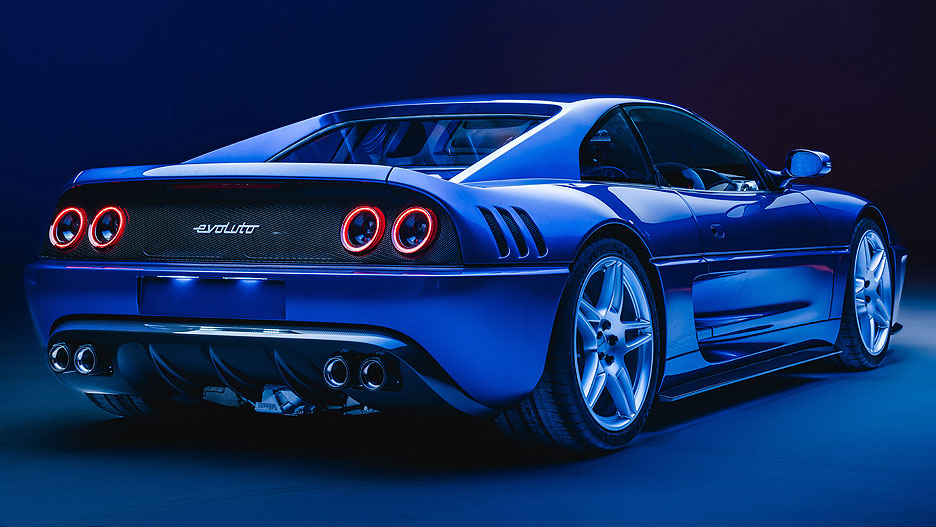
355 by Evoluto
The 355 by Evoluto is one of those restomods where the very idea sounds like blasphemy. Rebuilding the Porsche 911 has long become an industry in its own right; the old Defender is ideal material for experimentation; but touching the Ferrari F355 means entering territory where collectors begin to speak in whispers.
The British (who else) at Evoluto Automobili, with participation from DRVN Advanced Engineering and the CALLUM design studio, chose precisely this provocative point: the compact mid-engined Ferrari of the 1990s with a naturally aspirated V8, an open-gate manual shifter, and a reputation as one of the last truly analogue stallions from Maranello.
The project's philosophy is called Peak Analogue. The donor F355 is literally rebuilt around its heart—the naturally aspirated V8 retains its 3.5 litres, and for a premium is enlarged to 3.7 litres. The engine builders have given it over two hundred new and reworked components, a MoTeC ECU, and up to 480 bhp. The gearbox remains the same—a six-speed manual with an open gate. Just imagine the looks on the faces of the Italians if the British had got rid of that almost dandyish shift mechanism.
The body now features carbon-fibre panels. There is also contemporary lighting, a diffuser, forged 19-inch wheels, and widened tracks. Beneath this lies reworked suspension geometry, adaptive dampers, Brembo brakes, and a dry weight of around 1250 kg. In total, Evoluto plans 55 examples.
The restomods of 2026 are writing their own alternative history of automotive engineering. This is a highly stubborn art form that gives old and often defunct cars a second life and a new biography.


